Why Quality Degrades as Franchises Grow
Every franchise system faces the same paradox: the growth that validates the model also threatens it. At five locations, the founder can personally oversee quality. At 50 locations, that becomes impossible. At 200+, the only thing that maintains standards is the system — not the people, not the culture, not the founder's presence. The system.
According to the International Franchise Association, the most common cause of franchise system failure is not market conditions or competition — it is inconsistent execution at the unit level. When customers cannot predict the experience from one location to the next, the brand equity that makes franchising valuable begins to erode. The solution is operational excellence: the disciplined, systematic approach to delivering a consistent product and experience at every location, every day, regardless of who is working.
What follows are the six pillars that have allowed Pure Green Franchise to maintain quality and consistency across a growing multi-unit system. These are not theoretical frameworks — they are the operational practices that were built, tested, and refined through the actual experience of scaling a franchise.
Documented Standards: The Operations Manual as a Living System
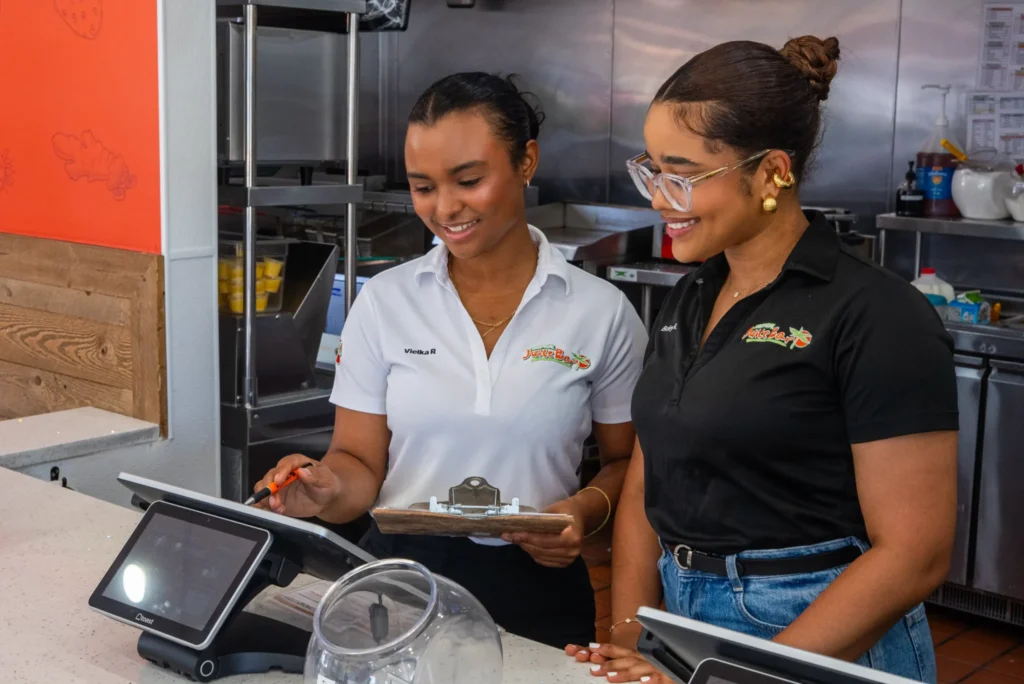
The operations manual is the most important document in any franchise system. It is the codification of everything the franchisor has learned about how to run the business profitably and consistently. Most franchise systems treat it as a legal formality — a document that gets handed over at signing and never opened again. The franchise systems that maintain quality at scale treat it as a living operational tool.
A well-constructed operations manual covers every repeatable process in the business: opening and closing procedures, product preparation standards, customer service protocols, inventory management, equipment maintenance, staff scheduling, and compliance requirements. Each procedure should be documented at the level of detail where a new employee with no prior experience could execute it correctly on their first day. If the documentation requires interpretation, it is not specific enough.
"If it is not written down, it does not exist as a system. It exists as a habit — and habits do not scale."
— Ross Franklin
The "living system" component is equally important. The operations manual should be updated whenever a better practice is identified, whenever a compliance requirement changes, or whenever a recurring problem reveals a gap in the documentation. At Pure Green, we treat the operations manual as a product — it has version numbers, update logs, and a formal review cycle. Franchisees are notified of updates and required to acknowledge receipt and implementation.
The FTC Franchise Rule requires that franchisors provide a Franchise Disclosure Document (FDD) that includes operational information, but the FDD is a legal document — not an operational one. The operations manual is where the real work happens. Franchisors who conflate the two end up with franchisees who are legally compliant but operationally inconsistent.

Training Architecture: Building Competence That Compounds
Documentation tells people what to do. Training builds the competence to do it. The distinction matters because knowledge and skill are not the same thing. A new employee can read the operations manual and understand the procedure intellectually. They cannot execute it at the required standard without deliberate practice under supervision. Training is the bridge between documentation and performance.
Effective franchise training architecture has three levels. The first is initial onboarding — the structured program that takes a new franchisee or employee from zero to operational competency. This should be a defined curriculum with clear milestones, competency assessments, and a certification standard that must be met before the individual operates independently.
The second level is ongoing development — the continuous training that keeps skills sharp, introduces new products or procedures, and addresses performance gaps identified through audits. The third level is leadership development — the training that prepares high-performing team members to become managers and high-performing franchisees to become multi-unit operators.
| Training Level | Audience | Frequency | Key Outcomes |
|---|---|---|---|
| Initial Onboarding | New franchisees, new team members | Once at hire/signing | Operational competency, brand standards certification |
| Ongoing Development | All team members | Monthly or quarterly | Skill reinforcement, new product/procedure rollout |
| Performance Remediation | Underperforming locations | As needed, post-audit | Gap closure, compliance restoration |
| Leadership Development | High performers, multi-unit candidates | Quarterly | Management readiness, multi-unit operator pipeline |
| Annual Franchise Conference | All franchisees | Annually | System alignment, best practice sharing, culture reinforcement |
Research from Harvard Business Review confirms that the most effective training is competency-based rather than time-based — meaning advancement is tied to demonstrated skill, not hours completed. This is the model we use at Pure Green: franchisees and team members advance through training levels by demonstrating competency, not by sitting through a curriculum.
Performance Metrics: What Gets Measured Gets Managed
You cannot manage what you cannot measure. This is not a cliché — it is the foundational principle of operational excellence at scale. Without consistent, real-time performance data across all locations, the franchisor is flying blind. Problems compound undetected. High performers go unrecognized. The system drifts from its standards without anyone noticing until the damage is significant.
Effective franchise performance measurement operates at three levels: unit economics (revenue, cost of goods, labor cost, four-wall EBITDA), operational metrics (throughput, waste percentage, average ticket, customer satisfaction scores), and compliance metrics (audit scores, training completion rates, health inspection results). Each level tells a different story about the health of the location.

The key is not collecting more data — it is collecting the right data and making it actionable. At Pure Green, each franchisee has access to a performance dashboard that shows their key metrics in real time, benchmarked against system averages. This creates transparency and healthy competition. Franchisees can see exactly where they stand relative to the system, which drives self-directed improvement without requiring constant franchisor intervention.
The franchisor's role is to set the benchmarks, provide the tools, and intervene when a location falls below threshold. According to Franchise Direct, franchisors who implement systematic performance benchmarking see measurably higher franchisee satisfaction and lower system-wide turnover — because franchisees who understand their performance data make better decisions and achieve better results.
Quality Audit Systems: Accountability Without Adversarialism
Performance data tells you what is happening. Quality audits tell you why. A well-designed audit system is not a compliance exercise — it is a diagnostic tool that identifies the root causes of performance gaps and provides the specific, actionable feedback needed to close them. The distinction between a punitive audit and a developmental one is the difference between a franchise system that improves and one that stagnates.
Effective franchise quality audits have four components. First, a standardized scorecard that evaluates every location against the same criteria — product quality, cleanliness, customer service, operational compliance, and brand standards. Second, a trained audit team that applies the scorecard consistently and objectively. Third, a structured feedback process that delivers findings in a way that is specific, actionable, and developmental rather than punitive. Fourth, a follow-up protocol that verifies corrective actions have been implemented.
"The best audit is one the franchisee looks forward to — because they know it will make them better, not just grade them."
— Ross Franklin
At Pure Green, we conduct both scheduled and unannounced audits. Scheduled audits allow franchisees to prepare and demonstrate their best performance. Unannounced audits reveal the day-to-day operational reality. The combination gives a complete picture of the location's standards. Franchisees who score below threshold receive a remediation plan with specific timelines and support resources — not a warning letter.
The cultural framing matters enormously. When franchisees understand that audits exist to help them succeed — not to catch them failing — they engage with the process constructively. The franchisor's job is to maintain that framing consistently, especially when audit scores reveal serious problems. The goal is always improvement, not punishment.
Culture at Scale: Standards Without the Founder in the Room
Systems and metrics can enforce compliance. Only culture can produce excellence. The difference is the difference between a team that follows the rules because they are required to and a team that holds the standard because they believe in it. At scale, culture is the only thing that produces the latter — and culture cannot be mandated. It has to be built.
Building culture at franchise scale requires three things. First, clarity of values — the franchise system must have a small number of clearly articulated values that define how the business operates and why. These values need to be specific enough to guide decisions, not generic enough to be ignored. "We care about quality" is not a value. "We never compromise on ingredient standards, even when it costs more" is a value.
Second, consistent reinforcement — values need to be demonstrated, not just declared. Every communication from the franchisor, every training module, every audit interaction, every franchise conference should reinforce the same values. When the franchisor's behavior is inconsistent with the stated values, franchisees notice — and the culture erodes.
Third, recognition and community — franchisees who embody the culture need to be recognized publicly and rewarded tangibly. The annual franchise conference is one of the most powerful culture-building tools available to a franchisor. When high-performing franchisees are celebrated in front of their peers, the culture becomes aspirational rather than obligatory.
For a deeper look at how brand values translate into franchise culture, see How to Build a Category-Defining Brand from Scratch. The brand strategy and the operational culture are not separate — they are two expressions of the same identity.
Technology Stack: The Infrastructure of Consistency
The five pillars above describe what needs to happen. Technology determines how efficiently it can happen at scale. A franchise system that relies on manual processes — spreadsheets, phone calls, paper checklists — cannot maintain operational excellence across 200+ locations. The cognitive and administrative load is simply too high. Technology is not a nice-to-have; it is the infrastructure that makes the other five pillars scalable.
The core technology stack for a multi-unit franchise system includes: a point-of-sale system that captures real-time transaction data across all locations; a learning management system (LMS) that delivers and tracks training completion; an operations management platform that digitizes checklists, audit forms, and corrective action workflows; and a performance dashboard that aggregates data from all systems and presents it in an actionable format.
The selection and implementation of these systems is one of the highest-leverage decisions a franchisor makes. The right technology stack reduces the administrative burden on both the franchisor and the franchisee, increases the speed of feedback loops, and makes it possible to identify and address problems before they become systemic. For more on the systems architecture required to scale, see The 5 Systems Every Franchise Must Build Before Scaling.
Putting the Six Pillars Together
Operational excellence is not a destination — it is a discipline. The six pillars described in this article are not a checklist to complete once. They are an ongoing practice that requires continuous investment, iteration, and leadership attention. The franchise systems that maintain quality at scale are the ones that treat operational excellence as a core strategic priority, not an operational afterthought.
The compounding effect of all six pillars working together is significant. Documented standards reduce training time. Strong training reduces audit failures. Consistent metrics identify problems early. Quality audits drive continuous improvement. A strong culture makes all of it sustainable. Technology makes all of it scalable. Each pillar reinforces the others — and the system as a whole is more powerful than the sum of its parts.
For franchisors who are early in their scaling journey, the most important thing is to start building these pillars before you need them. The time to document your operations manual is before you have 50 locations, not after. The time to build your training architecture is before your first franchisee opens, not when the second one is struggling. Operational excellence is built in advance of scale — not in response to it.
Explore Pure Green Franchise
Pure Green Franchise is one of the fastest-growing wellness franchise systems in the United States. If you are interested in owning a location or learning more about our franchise model, we would love to connect.