Franchise Opportunities
in 2025
Explore the best franchise opportunities of 2025. Ross Franklin — founder of Pure Green, 200+ locations — breaks down how to evaluate, finance, and launch a franchise that builds real wealth.
806K+
Franchise Establishments in the U.S.
$893B
Franchise Industry Output (2025 est.)
8.7M
Americans Employed by Franchises
$6.8T
Global Wellness Economy
Table of Contents
The landscape of franchise opportunities has never been more dynamic — or more consequential for first-time investors and seasoned entrepreneurs alike. In 2025, the franchise model continues to outperform independent startups on nearly every metric: survival rate, time to profitability, and access to proven systems. Yet not all franchise opportunities are created equal. The difference between a franchise that builds generational wealth and one that drains your savings comes down to three things: the strength of the underlying business model, the quality of franchisor support, and the discipline of your due diligence.
Ross Franklin built Pure Green Franchise from a single Manhattan juice bar to 200+ locations nationwide. Along the way, he developed a framework for evaluating franchise opportunities that cuts through the noise — and this guide is the most complete version of that framework he has ever published. Whether you are exploring your first franchise or building a multi-unit portfolio, this is the resource to bookmark.
Why Franchise in 2025
The economic environment of 2025 has created a unique window for franchise investment. Interest rates have stabilized, consumer spending on wellness and services remains resilient, and the International Franchise Association (IFA) projects franchise output to reach $893 billion this year — a 4.1% increase over 2024. Meanwhile, the wave of corporate downsizing has created a large pool of experienced operators who are actively seeking business ownership for the first time.
Franchising offers something that independent entrepreneurship cannot: a proven playbook. You are not inventing the product, the marketing system, the supply chain, or the training program. You are executing a model that has already been stress-tested across dozens or hundreds of locations. For investors who want the upside of business ownership without the risk of building from zero, the franchise model remains the most efficient path available.
The caveat is selectivity. The IFA lists over 4,000 active franchise systems in the United States. The majority of them are mediocre. Identifying the handful that offer genuine structural advantages — strong unit economics, growing markets, and franchisee-first cultures — requires a rigorous evaluation process. The sections below give you that process.
Top Sectors for Franchise Opportunities
Not all industries offer equal franchise opportunity. The sectors with the strongest tailwinds in 2025 share three characteristics: they serve needs that are non-discretionary or deeply habitual, they benefit from demographic trends that are multi-decade in duration, and they have unit economics that support multi-unit ownership at scale.
| Sector | Market Size | Growth Rate | Avg. Investment | Recurring Revenue |
|---|---|---|---|---|
| Wellness & Healthy Food | $6.8T global | 8–12% / yr | $150K–$400K | High |
| Home Services | $600B U.S. | 6–9% / yr | $50K–$200K | Very High |
| Senior Care | $300B U.S. | 10–14% / yr | $100K–$300K | Very High |
| Fitness & Recovery | $35B U.S. | 7–10% / yr | $200K–$600K | High |
| B2B Services | $500B U.S. | 5–8% / yr | $50K–$150K | High |
| Quick-Service Restaurants | $350B U.S. | 3–5% / yr | $300K–$1M+ | Medium |
The wellness and healthy food segment stands out because it combines the highest growth rate with a consumer base that is deeply habitual. Customers who visit a juice bar or smoothie concept three to five times per week are not making discretionary purchases — they are maintaining a lifestyle. This behavioral loyalty is the foundation of strong average unit volumes and high franchisee satisfaction scores. For a deeper dive, see the Wellness Franchise Opportunities guide.
How to Evaluate Any Franchise Opportunity
The evaluation framework Ross Franklin uses when assessing any franchise opportunity — whether his own or a competitor's — comes down to five pillars. Each pillar has a set of specific questions that must be answered before any capital is committed.
What is the average unit volume? What are the gross and net margins? How long does it take to break even? Request Item 19 of the FDD and validate with franchisees.
Is the franchisor growing or contracting? What is their franchisee turnover rate? Review Item 20 of the FDD for the number of units opened and closed in the last three years.
Is there genuine consumer demand in your target territory? Is the category growing or declining? Avoid franchises in saturated or declining categories regardless of brand strength.
What does initial training cover? Is there ongoing field support? Does the franchisor provide marketing, technology, and supply chain assistance? A weak support system is a red flag.
Engage a franchise attorney to review the FDD and franchise agreement. Understand all fees, territory rights, renewal terms, and exit provisions before signing anything.
For a complete checklist of questions to ask during due diligence, read the How to Evaluate a Franchise Opportunity guide.
"The best franchise opportunity is not the most famous brand — it's the one with the strongest unit economics, the most honest franchisor, and the market that matches where consumer behavior is heading."
— Ross Franklin, Founder & CEO, Pure Green Franchise
Understanding Franchise Costs
One of the most common mistakes first-time franchise buyers make is focusing exclusively on the franchise fee while underestimating total startup costs. The franchise fee — typically $25,000 to $50,000 for most mid-market concepts — is only a fraction of the total investment. The full picture includes build-out and construction, equipment, initial inventory, working capital for the first 6–12 months, and grand opening marketing.
Item 7 of the Franchise Disclosure Document provides an estimated initial investment range. This range is your starting point, not your budget. Add a 15–20% contingency buffer for cost overruns, which are common in construction and build-out. For a detailed breakdown of how to model franchise financials, see the Franchise Financing guide.
Beyond startup costs, understand the ongoing fee structure. Royalties (typically 4–8% of gross sales) and marketing fund contributions (typically 1–3%) are paid every week or month regardless of profitability. A franchise with a 7% royalty and 2% marketing fund requires 9% of every dollar in revenue to go back to the franchisor before you pay any other operating expense. Model this carefully against your projected unit economics before committing.
Financing Your Franchise
Most franchise investors do not pay for their franchise entirely out of pocket. The most common financing paths are SBA loans (particularly the SBA 7(a) and SBA 504 programs), conventional bank loans, ROBS (Rollover for Business Startups, which allows you to use retirement funds without penalty), and franchisor-sponsored financing programs. Each path has different eligibility requirements, interest rates, and repayment structures.
The SBA loan program is the most widely used financing vehicle for franchise investment. SBA-approved franchises — those listed on the SBA Franchise Registry — can access loans with lower down payments (as low as 10–15%) and longer repayment terms (up to 10 years for working capital, 25 years for real estate). Pure Green Franchise is SBA-registered, which significantly reduces the capital barrier for qualified buyers.
For a complete breakdown of every financing option available to franchise buyers, including ROBS, equipment leasing, and portfolio lending, read the Franchise Financing guide.
The Wellness Franchise Advantage
Among all franchise categories, wellness — and specifically healthy food and beverage — offers a structural advantage that most investors underestimate. The category benefits from three compounding trends: the shift toward preventative health, the premiumization of food and beverage, and the rise of the health-conscious consumer as the dominant demographic in the U.S. economy.
The Global Wellness Institute values the global wellness economy at $6.8 trillion — larger than the pharmaceutical industry. Within that, the healthy food and beverage segment is growing at 8–12% annually, driven by millennials and Gen Z consumers who spend more per capita on health-oriented products than any previous generation. This is not a trend. It is a structural shift in consumer behavior that will define the next two decades of retail.
For investors evaluating juice bar franchise opportunities specifically, the unit economics are compelling: lower cost of goods than traditional QSR, a smaller footprint (typically 600–1,200 sq ft), and a customer base with above-average income and loyalty. For a comprehensive analysis of the wellness franchise landscape, see the Wellness Franchise Opportunities guide.
Multi-Unit vs. Single-Unit Ownership
The most financially successful franchisees are almost always multi-unit operators. A single franchise unit generates income; a portfolio of units generates wealth. The economics of multi-unit ownership are compelling: fixed costs like management, accounting, and marketing are spread across multiple revenue streams, while the franchisor typically offers reduced fees and preferred territory rights to operators who commit to development agreements.
The typical path is to open your first unit, stabilize operations over 12–18 months, and then use the cash flow and equity from that unit to fund your second. By unit three or four, the portfolio begins to generate meaningful passive income. Multi-unit operators who own 5–10 units in a high-growth wellness concept can build a business worth $3–5M in enterprise value over a 7–10 year horizon.
The key to multi-unit success is hiring a strong general manager for your first unit before you open your second. The franchisee who tries to operate every unit personally hits a ceiling at two or three locations. The franchisee who builds a management layer early can scale to 10+ units without burning out.
The Pure Green Opportunity
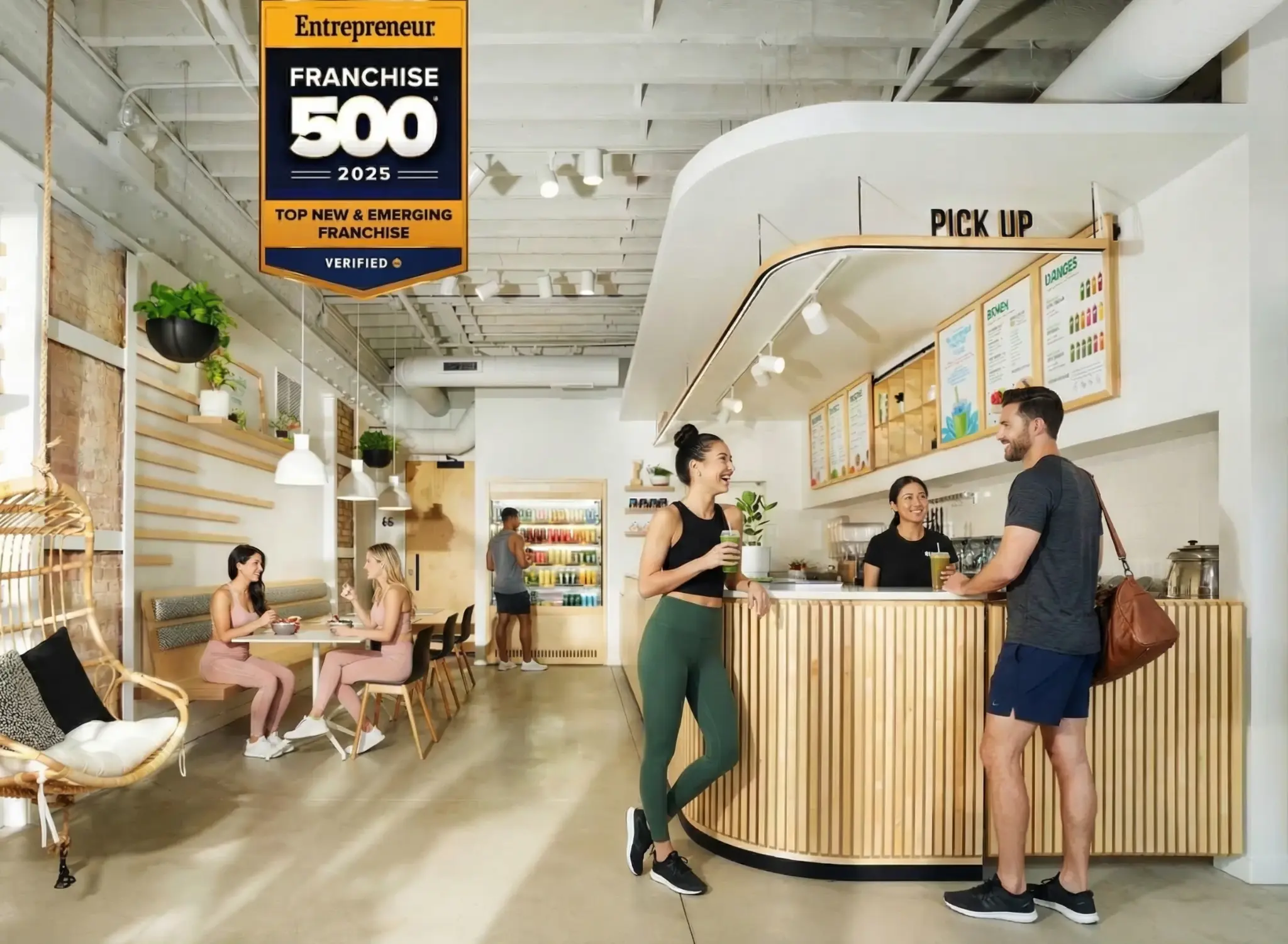
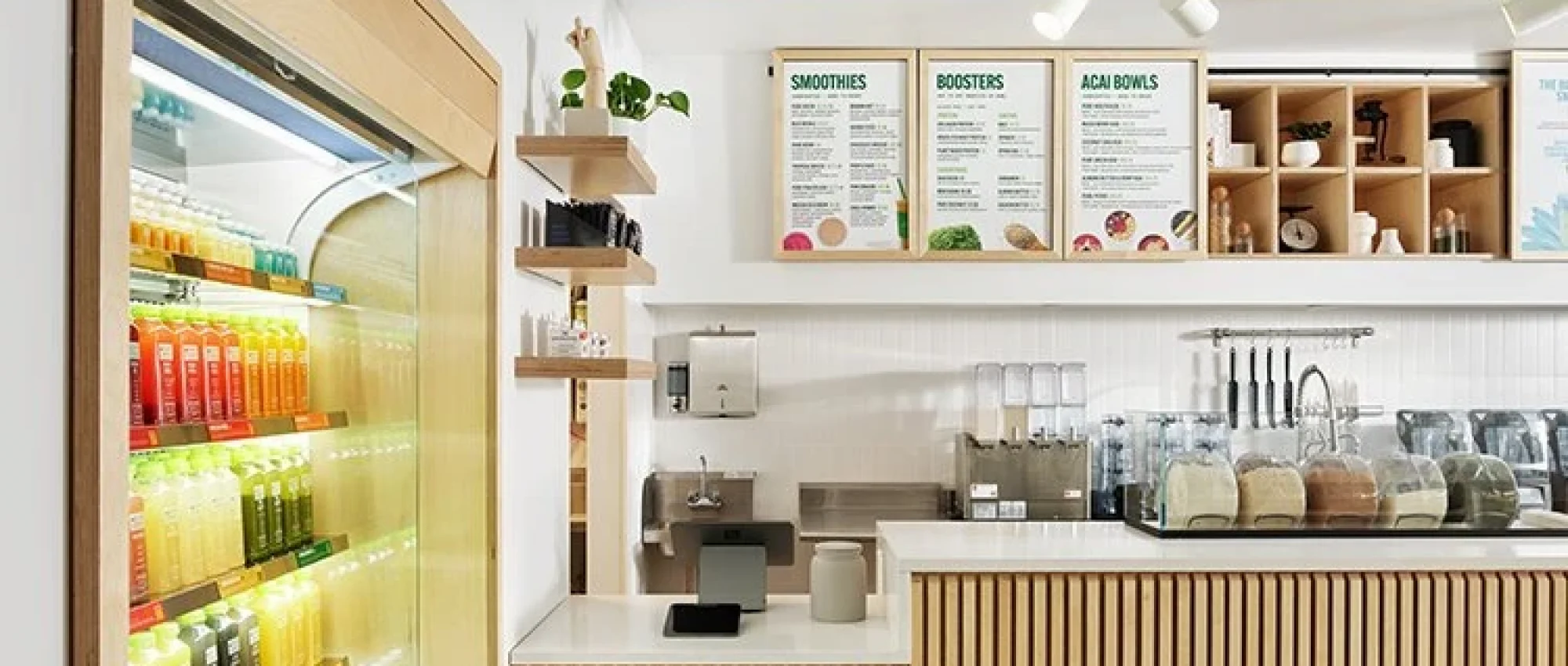
Pure Green Franchise is one of the fastest-growing wellness franchise systems in the United States, with 200+ locations open or in development across 30+ states. The concept is built around cold-pressed juices, superfood smoothies, and acai bowls — a product mix that serves the health-conscious consumer at a premium price point with industry-leading margins.
What differentiates Pure Green from other wellness franchise opportunities is the depth of its support infrastructure. From site selection and lease negotiation to grand opening marketing and ongoing performance coaching, franchisees receive hands-on support at every stage of the business lifecycle. The brand is SBA-registered, has a proven multi-unit development model, and is actively seeking qualified operators in key markets across the country.
Ready to Explore Pure Green?
Request your franchise information package and speak directly with Ross Franklin's franchise development team.
Explore Pure Green Franchise →Frequently Asked Questions
Found this useful? Follow Ross on LinkedIn for weekly insights on franchise growth, brand strategy, and wellness entrepreneurship.